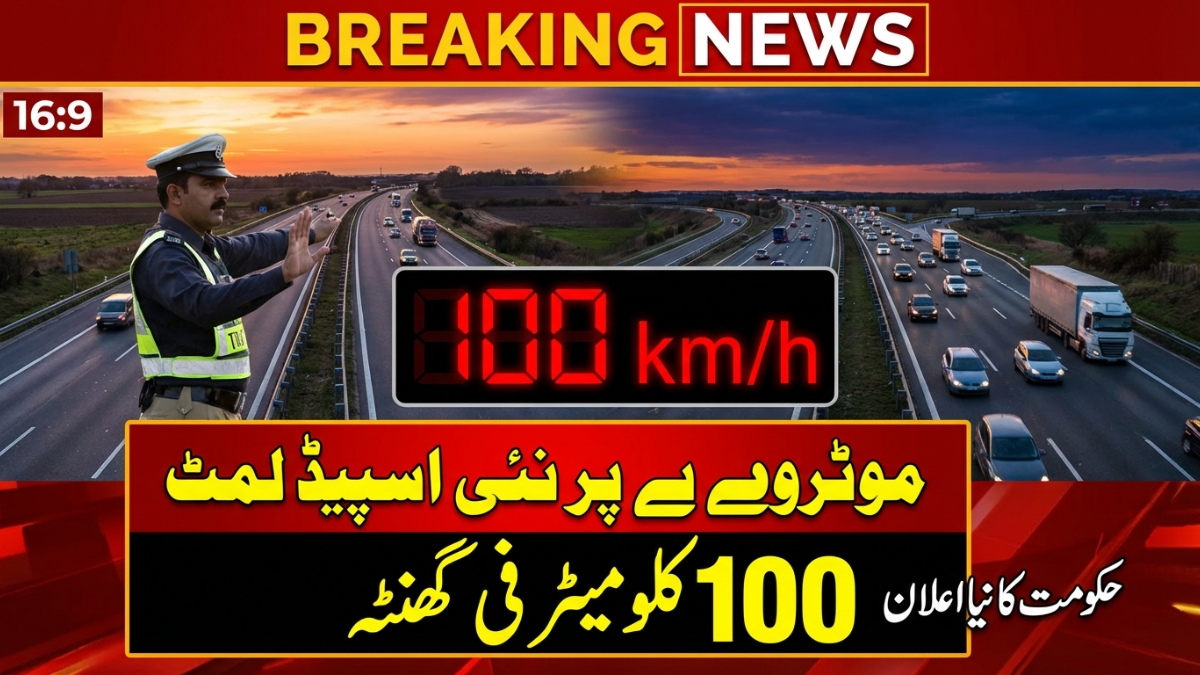

ISLAMABAD: The government of Pakistan has introduced new speed limits for motorways and national highways as part of a broader plan aimed at conserving fuel and improving road safety across the country. The updated regulations were announced by the National Highways and Motorway Police (NHMP) and are now being implemented nationwide.
Officials say the move comes at a time when the country is facing economic pressure and rising fuel costs. Lower traffic speeds are expected to reduce fuel consumption and make highways safer for travelers, especially during the busy travel period around Eid-ul-Fitr.
New Motorway Speed Limits Announced
Under the revised rules, the maximum speed limit for cars and light transport vehicles (LTVs) on motorways has been reduced from 120 km/h to 100 km/h.

For larger vehicles, including passenger buses and heavy transport vehicles, the new limit is 90 km/h instead of the previous 110 km/h.
Updated Motorway Speed Limits
| Vehicle Type | Previous Limit | New Limit |
|---|---|---|
| Cars / LTVs | 120 km/h | 100 km/h |
| PSVs / HTVs | 110 km/h | 90 km/h |
Authorities have urged drivers to strictly follow these new rules to avoid fines and ensure safer travel.
Speed Limits Reduced on National Highways
The government has also revised speed limits for vehicles traveling on national highways.
Under the new regulations:
- Cars and light vehicles can travel up to 80 km/h instead of the previous 100 km/h.
- Passenger and heavy transport vehicles are now limited to 65 km/h, down from 80 km/h.
Updated Highway Speed Limits
| Vehicle Type | Previous Limit | New Limit |
|---|---|---|
| Cars / LTVs | 100 km/h | 80 km/h |
| PSVs / HTVs | 80 km/h | 65 km/h |
These changes will apply across Pakistan’s national road network.

Awareness Campaign for Drivers
The Motorway Police have launched a nationwide awareness campaign to inform drivers about the new speed regulations. Authorities are encouraging motorists to cooperate with the new policy and reduce vehicle speed to support the country’s energy conservation efforts.
Officials say awareness campaigns will continue across motorways and highways to help drivers understand the revised rules.
Fines for Violating the New Speed Limits
The Motorway Police have also started strict enforcement of the new speed limits, and drivers exceeding the revised limits may face fines.
Reports indicate that fines have already been issued on certain motorway sections for violations. In one case, a driver traveling above the permitted speed limit was fined Rs2,500 for exceeding the 100 km/h limit.

Authorities have warned that strict monitoring will continue to ensure compliance.
Step Toward Energy Conservation
Government officials say the decision to lower speed limits is part of a broader strategy to reduce fuel consumption and promote energy efficiency. Lower speeds can help vehicles burn less fuel and reduce the overall energy burden on the country.
In my opinion, measures like this can also improve road safety by reducing high-speed accidents, particularly during peak travel periods such as Ramadan and Eid holidays.

FAQs
What is the new motorway speed limit in Pakistan
The speed limit for cars and LTVs on motorways is now 100 km/h, reduced from the previous 120 km/h.
What is the speed limit for buses and trucks on motorways
Passenger service vehicles and heavy transport vehicles are now limited to 90 km/h.
What is the speed limit on national highways
Cars can travel up to 80 km/h, while heavy vehicles are restricted to 65 km/h.
Why were speed limits reduced
The government reduced speed limits to save fuel and improve road safety across Pakistan.
