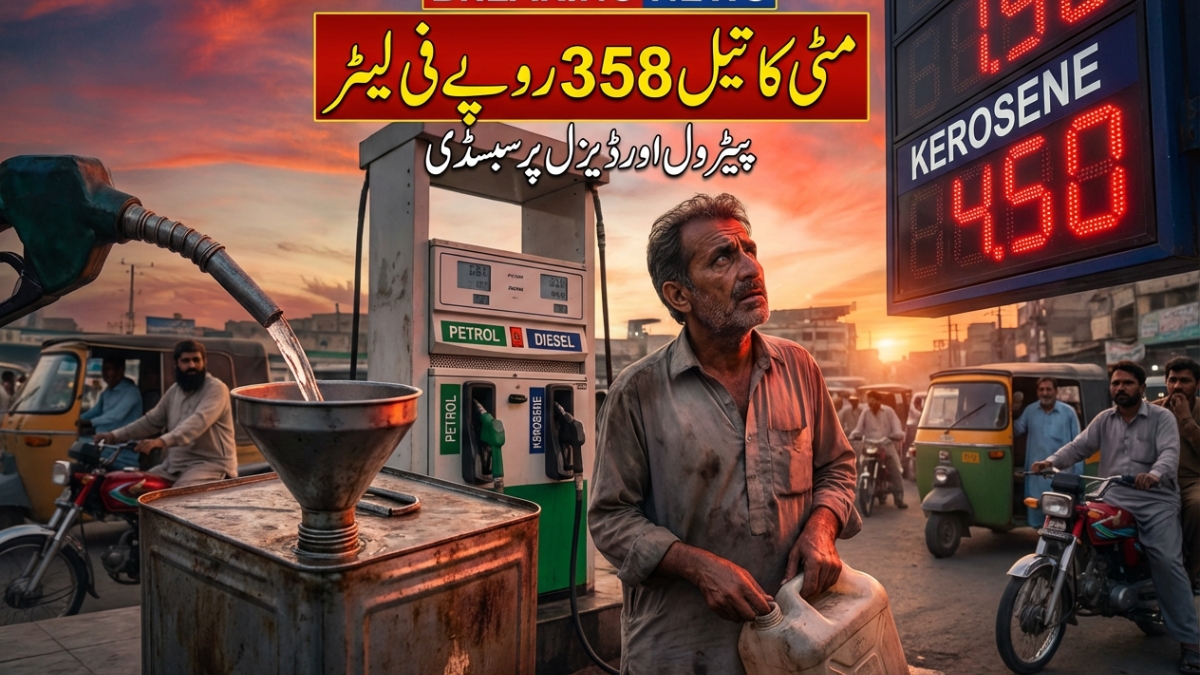

The federal government has announced a fresh adjustment in petroleum prices, increasing the price of kerosene oil while keeping petrol and diesel unchanged for now. The decision comes at a time when global oil markets remain unstable and Pakistan continues to manage rising energy costs.
According to the latest notification issued by the Ministry of Energy, the price of kerosene oil has been increased by Rs39.20 per litre, bringing the new rate to Rs358.01 per litre.
Meanwhile, petrol and high-speed diesel prices have been kept unchanged after the government approved a temporary subsidy to protect consumers from further fuel price shocks.
Kerosene Becomes the Most Expensive Fuel
With the latest increase, kerosene has now become one of the most expensive petroleum products available to consumers in Pakistan. The fuel, often used by lower-income households for cooking and heating, has seen a significant rise in recent weeks.
Earlier in March, kerosene prices had already jumped sharply from around Rs188 per litre to Rs318.81 per litre, marking one of the largest increases in recent years.
After the latest adjustment, the price has now crossed Rs358 per litre, further increasing the burden on households that rely on kerosene as an alternative energy source.
Petrol and Diesel Prices Kept Unchanged
Despite the kerosene hike, the government decided to maintain existing petrol and diesel prices for the current review period.
Officials confirmed that the government will pay a Rs23 billion subsidy to oil marketing companies in order to keep petrol and diesel prices stable between March 14 and March 20.
Under the subsidy mechanism:
- Petrol will receive a subsidy of Rs49.63 per litre
- Diesel will receive a subsidy of Rs75.05 per litre
This price differential will be compensated to oil marketing companies after verification by the Oil and Gas Regulatory Authority (OGRA).
In my opinion, this step shows that the government is trying to temporarily shield consumers from further inflation, especially at a time when transport and food prices are already under pressure.

Petroleum Levy Remains the Same
Along with keeping fuel prices unchanged, the government also maintained the existing petroleum levy rates.
Currently:
- Petrol carries a levy of Rs105.37 per litre
- High-speed diesel carries a levy of Rs55.24 per litre
These levies form an important part of the government’s non-tax revenue and are also linked to commitments made under international financial programs.
Why Fuel Prices Are Rising
Recent fuel price adjustments in Pakistan are closely linked to developments in global energy markets. Rising geopolitical tensions and disruptions in oil supply chains have pushed international crude prices higher.
Earlier this month, Pakistan had already increased petrol and diesel prices by around Rs55 per litre due to rising global oil costs.
From what I have seen in recent updates, the government has now shifted to a weekly review mechanism for fuel prices. This means prices may continue to fluctuate depending on global oil market trends.
Impact on Consumers
While petrol and diesel prices are temporarily stable, the sharp increase in kerosene prices could directly affect households in rural and remote areas.

Kerosene is commonly used where gas supply is limited. Any increase in its price often leads to higher household expenses for heating and cooking.
At the same time, the government’s decision to subsidize petrol and diesel may help control transportation costs and prevent another immediate spike in inflation.
However, experts believe fuel prices will continue to depend heavily on global oil markets in the coming weeks.
Frequently Asked Questions
What is new price of kerosene in Pakistan?
The government has increased the price of kerosene oil to Rs358.01 per litre after a hike of Rs39.20 per litre.
Are petrol and diesel prices increasing?
No. The government has decided to keep petrol and diesel prices unchanged for the current review period.

Why did the government increase kerosene prices?
The increase is mainly due to rising international oil prices and adjustments in domestic petroleum pricing.
How much subsidy is being given on petrol and diesel?
The government approved a Rs23 billion subsidy, including Rs49.63 per litre on petrol and Rs75.05 per litre on diesel.
Who regulates petroleum prices in Pakistan?
Fuel prices are determined through recommendations by the Oil and Gas Regulatory Authority (OGRA) and approved by the federal government.
